

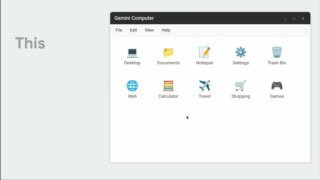
Google demonstrated an example of how a generative operating system works
This is the very concept that has been discussed in the tech community for a long time. The main idea is that there are no pre-installed applications or fixed interfaces within the system — everything is built from scratch.
Every time a user makes a choice or clicks a button, the next screen is generated by a model on the fly. In other words, when you open an application, it is also generated in real-time. Unlike traditional memory, this system uses a contextual window: files are not saved, but recreated anew each time based on your previous actions and requests.
This solution is called Gemini Computer by Google. It’s worth noting that this is not a full release but a demonstration of the capabilities of the new Gemini 2.5 Flash Light version, which was published yesterday on the official YouTube channel.
The goal was to show that the new model is so fast and responsive that it can handle tasks like this (processing 460 tokens per second — a good result).
Overall, it looks very interesting. It seems that Google was the first to come up with something like this.