

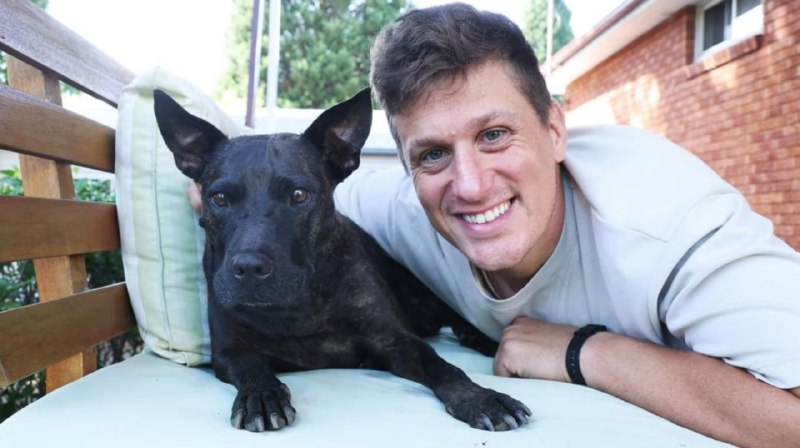
Rescue of Rozi
You’ve probably heard about a news story that sounds like it came straight from a science fiction novel. In Australia, machine learning specialist Paul Koninghem used artificial intelligence and several laboratory technologies to create a personalized mRNA vaccine for his dog Rozi, who was battling cancer. Although a full cure is still ahead, progress is already noticeable.
How is this even possible? After all, there is currently no widespread use of personalized human mRNA vaccines — they are still in Phase III clinical trials.
Cancer is primarily a failure of the immune system. Every day, cancerous cells appear in our bodies, but the immune system usually manages to deal with them. When it fails, a dangerous diagnosis arises.
Moreover, cancer is a mutation. It is unique to each individual. Long ago, doctors tried to combat this with destructive methods: removing affected organs, flooding the body with toxic chemicals, and radiation therapy. But why was it not possible to target it more precisely? Developing new drugs is a lengthy and costly process, often involving processing vast amounts of data. With the development of machine learning technologies, much has changed: ten years ago, determining the structure of a single protein could take a year and cost hundreds of thousands of dollars. By 2020, DeepMind’s AlphaFold model was able to determine the structure of nearly all known proteins — and all this was done free of charge for scientific purposes.
AI is actively used at other stages of drug development as well, helping to accelerate processes and reduce costs. Most importantly, now it’s possible to create not only “standard” drugs but also tailor them to specific patients.
In developing personalized mRNA vaccines, doctors compare the DNA of healthy tissues with the tumor DNA of the patient and look for mutated proteins — so-called neoantigens. Then, machine learning algorithms select those with a high probability of provoking an immune response and create a vaccine based on them. If everything goes according to plan (and currently these technologies are undergoing clinical trials), the immune system begins to “see” the tumor and activates to destroy it (these vaccines are usually used alongside other medications).
This approach was also used by Paul Koninghem with his dog Rozi. When conventional treatment failed, he turned to ChatGPT for advice on the most promising methods for fighting cancer — AI helped him understand the main approaches, choose the best option, and develop an action plan. First, he sequenced the DNA of Rozi’s healthy cells and tumor for about $3,000. For analysis, Paul used the same AlphaFold — which is now freely available for scientific research. Google’s model helped him identify individual targets for vaccine development.
The creation of the vaccine was assisted by Pall Tordarson — director of the RNA Institute at the University of New South Wales (UNSW). The injection was administered by Rachel Allavena from the University of Queensland — she had approval to conduct such experiments. The bureaucratic process took about three months: during this time, Koninghem prepared an extensive ethical report of around 100 pages.
To date, a 75% reduction in one tumor has been achieved, while another did not respond to treatment at all. But Rozi improved, and Paul gained time for further experiments. We hope for good luck!
What’s important to emphasize: right now, we are witnessing the birth of a new form of Citizen Science — ordinary people without specialized education participating in scientific research with the help of modern technologies. In the past, citizen scientists helped researchers observe bird migrations or search for unusual objects on star maps.
But Rozi’s case is a completely different example: thanks to his efforts and AI guidance, he achieved significant results without biological training. Paul is not just “an ordinary person with a chatbot,” but has 17 years of experience in machine learning. Artificial intelligence did not fully replace expertise here — it made it easy to transfer knowledge from one field to another. What new discoveries await us in the future? It’s hard to say.
In general, stay tuned for developments and this incredible success story!
Created with n8n:
https://cutt.ly/n8n
Created with syllaby:
https://cutt.ly/syllaby