

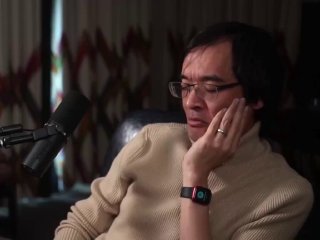
Leks Friedman interviewed Terrence Tao — one of the brightest geniuses of modern mathematics.
Terrence Tao is a recognized leader in mathematics today. His name is well known for many achievements:
• He appeared as a wunderkind in Australia: at the age of ten, he participated in an international mathematics olympiad, and by 21, he defended his doctoral degree.
• In 2006, he was awarded the prestigious Fields Medal — the highest award for achievements in mathematics, for work in harmonic analysis, differential equations, and ergodic theory.
• He has applied his skills to solving problems related to Collatz conjecture, work in combinatorics, probability theory, Navier-Stokes equations, and other complex topics.
Let’s highlight some ideas from his interview 👇
▪️ How does Tao approach solving difficult problems?
He turns seemingly impossible tasks into a series of small games: first, he eliminates all obstacles, simplifies to the most manageable version, and then gradually reintroduces complexity. This method helps avoid getting stuck — it’s important to move forward, even when everything seems hopeless.
▪️ What is the essence of mathematical progress?
Progress arises when different mathematical languages are combined: geometry with algebra, dynamics with energy concepts, discrete models with analysis of complex equations. This leads to simple laws explaining why certain phenomena occur. However, for the financial markets, this approach doesn’t always work — there are too many hidden connections and unexpected nuances.
▪️ The new role of formal proofs and the Lean system
Tao believes that a revolutionary leap is the transition to rigorous formalization using the Lean system. This modern language and tool for verifying proofs on a computer: each proof becomes a program that is “compiled” and checked by hundreds of experts. This allows even the most complex hypotheses to be broken down into thousands of small tasks, making it possible to identify weak points and quickly eliminate errors. Automation and AI-powered autocomplete have already accelerated this process, and in the near future, writing in Lean will be much easier than on paper.
▪️ What does AI mean for the future of mathematics?
Today, AI successfully solves high school geometry problems, but it is not yet capable of true discoveries: it lacks intuition and gut feeling. Tao is confident that in the coming years, the key will be collaboration: humans set the strategy, and AI helps explore hypotheses, test solutions, and handle routine operations.
▪️ On the flexibility and robustness of hypotheses
Some hypotheses, such as those about infinite arithmetic progressions, remain true even with significant modifications. Others, like the twin prime conjecture, could fall apart if even a small part of the known numbers is removed — which is why such theories are so complex and mysterious.
In conclusion:
The mathematics of the future will be not just about new ideas, but about combining formal systems with close interaction with AI. Nonetheless, the most important discoveries will still remain in human hands, and artificial intelligence will help accelerate their pursuit.