

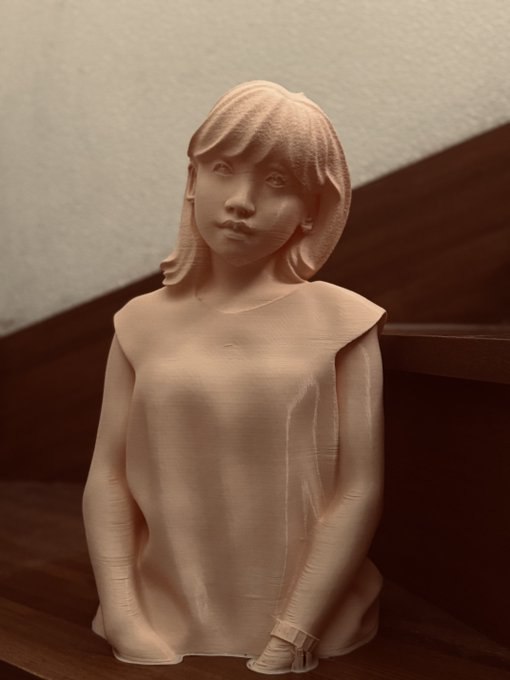
We have a new tool for creating 3D models — Sparc3D. It is capable of large-scale experiments in the field of volumetric shape generation.
The idea behind this system is quite simple: take a highly detailed model — with mesh details reaching 1536³ — and convert it into a voxel grid. Then, these voxels are enclosed within a polygonal shell. As a result, you get a very precise representation — with details almost as fine as ready for printing on a 3D printer. But there’s a downside — the resulting mesh tends to be too coarse and awkwardly shaped, resembling a shapeless mass.
Looking at examples, it’s clear that such models work well with complex, highly detailed objects. However, on faces and anatomical models, everything appears quite blurred. Overall, in my opinion, they cannot yet replace popular algorithms like Tripo, Huny, or Roden, which show better quality while maintaining natural forms.
But there’s good news — you can try a demo version and experiment with the tool! Here’s the link: https://huggingface.co/spaces/ilcve21/Sparc3D. More information about the project and scientific article can be found here: https://lizhihao6.github.io/Sparc3D/. There are even basic code snippets available, giving interested users a chance to take a closer look and understand.
And of course, all of this is just the beginning!