

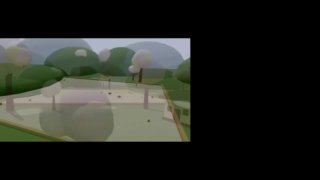
In the startup Eon Systems, scientists have taken a revolutionary step — they have created a full digital imitation of an animal’s brain capable of controlling its body.
The scientific community has long held the idea: instead of training the artificial system itself, one can take a real biological brain, fully copy it into a digital format, and run it on a robot or computer. This concept is especially popular among science fiction enthusiasts, as it opens the possibility of literally transferring consciousness into a machine.
Now, representatives of Eon Systems claim that they have achieved such a system for the first time and demonstrated its operation in practice. They took the brain of a fruit fly, made an exact copy, and created what is called a connectome — a complete map of all neural connections within that brain: all neurons, synapses, and signals.
The method of copying itself is not new — similar models have existed before, and even a copy of a fly’s brain was created as early as 2024. But the company’s main achievement is the first time integrating this model with a physical body in a simulation. In other words, they demonstrated a complete cycle: environment — sensors — brain — motor commands — body movement. This process is called “closing the sensorimotor loop,” meaning the connection of perception and action in a closed chain.
Interestingly, the virtual fly exhibits several basic behavioral patterns simultaneously, not just one type of response. There are no artificial neural networks involved — everything is based on the brain map connected to the simulated body, and it all worked. Although it would be incorrect to completely deny the role of machine learning: even with a neural map, the dynamics of their operation (excitation thresholds, synaptic strength, etc.) remain unknown, so these parameters are also modeled using special algorithms. Nonetheless, this system cannot be called “artificial intelligence” in the traditional sense.
The main achievement is that the principle of “uploading the brain” or dividing it into a digital copy has been experimentally confirmed. The authors are confident that further progress depends on the scalability of this approach. For comparison: a fly has about 140,000 neurons (copying that many is already no small feat), while humans have around 86 billion — a much more complex challenge.
Created with n8n:
https://cutt.ly/n8n
Created with syllaby:
https://cutt.ly/syllaby